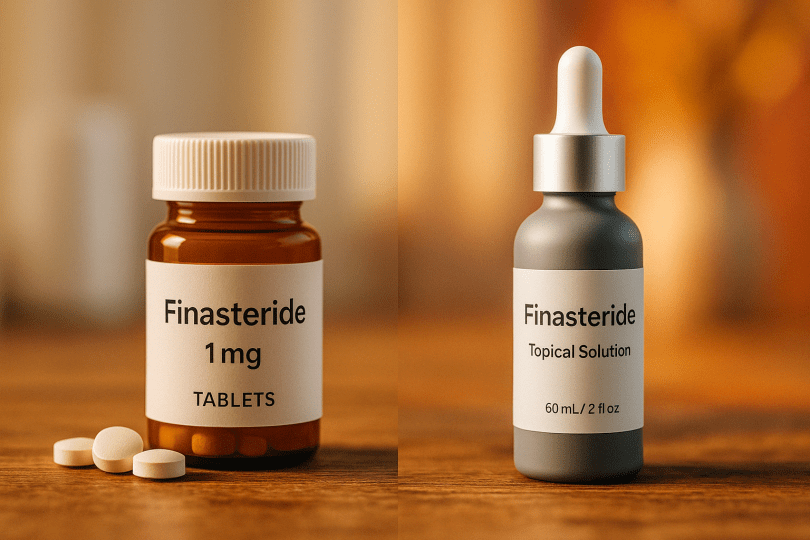
Hair loss is a challenging and often emotionally charged issue for many men. Fortunately, proven medications like Finasteride, Dutasteride, and Minoxidil have been helping millions of individuals slow or even reverse hair loss for decades. But recently, a growing interest in topical formulations promises similar benefits with potentially fewer side effects. So, which route—oral or topical—is truly the best for managing hair loss?
Why Medications Are Essential for Hair Loss
Male pattern baldness, scientifically known as androgenetic alopecia, is mainly caused by the hormone dihydrotestosterone (DHT). Over time, DHT causes hair follicles, particularly at the crown and front of the scalp, to shrink and produce thinner, shorter hair until they eventually stop producing visible hair altogether.
Effective hair loss treatments primarily work by reducing scalp DHT levels or improving blood flow to the scalp, thus maintaining and sometimes enhancing hair growth.
Oral Hair Loss Treatments: The Established Path
Finasteride and Dutasteride are the most commonly prescribed oral medications. Both belong to a class of drugs called 5-alpha-reductase inhibitors. They significantly reduce the conversion of testosterone into DHT, directly addressing the root cause of androgenetic alopecia.
Oral Minoxidil, originally developed to treat high blood pressure, improves blood circulation in the scalp, supporting healthier and stronger hair growth.
Pros and Cons of Oral Medications
- Pros:
- Proven, reliable efficacy.
- Convenient, typically once-daily dosing.
- Substantial clinical data supporting long-term use.
- Cons:
- Potential systemic side effects, including reduced libido, erectile dysfunction, and mood disturbances.
The Rise of Topical Treatments
Due to concerns about systemic side effects, topical solutions have surged in popularity. Topical hair loss treatments deliver medications directly to the scalp, theoretically minimizing their systemic absorption and thus potentially reducing side effects.
However, it’s critical to note that not all topical formulations are created equal. The effectiveness and safety profile of topical treatments heavily depend on the type of carrier molecule used. Some topical formulations can even result in higher systemic drug absorption than oral versions, defeating their primary advantage.
The Importance of the Carrier Molecule
A topical treatment’s effectiveness isn’t just about its active ingredients. It’s about how these ingredients are delivered into the scalp. Formulations utilizing advanced carrier technologies, such as solid lipid nanoparticles or liposomes, can effectively keep the medication localized within the scalp. This localized retention ensures reduced systemic absorption while maintaining effectiveness.
Currently, promising products like Zion’s Siloxys Gel use sophisticated carriers designed specifically for hair loss medications, potentially offering a balance of effectiveness and minimized systemic exposure.
Realistic Recommendations: Choosing the Right Treatment
For individuals who are comfortable with the possibility of side effects and prefer straightforward medication, oral treatments remain highly effective. Adjusting dosages and frequency can also mitigate side effects significantly, allowing many men to find a comfortable balance.
For those more cautious about side effects, carefully formulated topical solutions offer an attractive alternative. Topical Dutasteride, due to its larger molecular size, may further reduce systemic absorption compared to topical Finasteride, potentially enhancing safety profiles.
Combining Treatments: More is Sometimes Better
Emerging clinical evidence suggests that combining treatments can deliver superior results compared to single-drug therapies. For instance, combining oral or topical Finasteride with Minoxidil or even adding low-dose Dutasteride has shown promising additive effects.
Myths and Misconceptions About Concentrations
Higher concentrations of topical Minoxidil aren’t always better. While it’s common to see formulations ranging from 2% to 15%, research indicates that very high concentrations offer minimal additional benefits. Instead, optimal effectiveness largely depends on using the correct carrier formulation and maintaining consistent use.
Side Effects: Fact vs. Fiction
Despite legitimate concerns about side effects, it’s important to remember that psychological factors can significantly amplify perceptions of side effects. Careful dosage adjustments and professional monitoring can effectively minimize risks.
Conclusion: Consistency and Informed Choices Win
Ultimately, the best hair loss treatment is the one you can consistently use and that suits your personal comfort and lifestyle. Oral medications like Finasteride and Dutasteride remain highly effective, while advanced topical formulations provide an increasingly attractive alternative for those concerned about side effects.
Understanding these differences and choosing the right formulation and regimen with professional guidance ensures the best outcomes in your hair restoration journey.
 Medical Treatments for Hair Loss