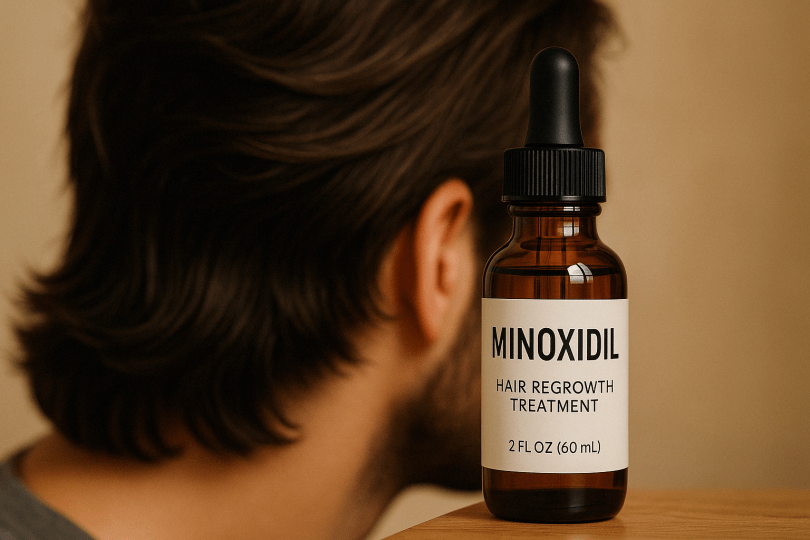
Hair loss can be a frustrating experience—one that prompts many people to seek out effective, science-backed solutions. Among all available treatments, Minoxidil stands out as a long-established option supported by decades of clinical use and research. Originally introduced to the market in the 1980s, Minoxidil’s key appeal is its ability to stimulate hair growth rather than addressing hormonal factors (such as DHT) directly. While other treatments block or reduce hormones that contribute to hair loss, Minoxidil acts as a “growth stimulator,” helping hair follicles produce thicker, healthier hair shafts over time.
This article provides an in-depth look at how Minoxidil works, who might benefit from it, the nuances of different formulations (like foam vs. liquid), how to handle initial shedding, and considerations around compliance. The goal is to equip you, as an interested layperson, with a solid understanding of why Minoxidil remains a cornerstone in the fight against hair loss, the strengths and limits of this topical medication, and how best to incorporate it into your hair-restoration journey.
1. Understanding the Role of “Stimulators”
When discussing the landscape of hair-loss treatments, it helps to differentiate between two broad strategies:
- Blockers
These therapies (e.g., Finasteride or Dutasteride) lower levels of dihydrotestosterone (DHT) or otherwise address the hormonal processes that cause hair follicles to miniaturize in androgenetic alopecia (male pattern baldness and, to some extent, female pattern hair loss). - Stimulators
These products (e.g., Minoxidil) aim to revitalize the follicles by lengthening the growth (anagen) phase of the hair cycle and encouraging thicker hair shafts. Rather than lowering hormone levels, stimulators work at the follicular level to maximize the potential of each hair strand.
Minoxidil is the quintessential stimulator. For individuals dealing with male pattern baldness—where DHT drives progressive thinning—Minoxidil alone does not address the root hormonal trigger. However, it can still yield a noticeable improvement in hair quality and volume by stimulating longer growth cycles and thicker hair.
2. A Brief History of Minoxidil
2.1 From Blood Pressure Drug to Hair-Stimulation Hero
Minoxidil was initially developed as an oral medication to treat high blood pressure. Patients and physicians soon noticed that a significant number of users experienced an unusual side effect: excessive hair growth on the body and scalp. Intrigued by these observations, researchers examined whether applying Minoxidil topically to the scalp could produce local hair-growth benefits without triggering the more systemic effects seen with oral dosing.
By the mid-1980s, clinical trials confirmed that a topical Minoxidil solution (sometimes known by brand names like Regaine or Rogaine in different regions) could indeed help stimulate hair growth on balding areas. In many countries, it became available by prescription in the late 1980s and then transitioned to over-the-counter status because of its strong safety profile. Today, individuals can walk into most pharmacies or drugstores and purchase a topical Minoxidil solution or foam without a doctor’s prescription.
2.2 Decades of Use and Ongoing Questions
Despite Minoxidil’s long history, its exact mechanism of action still isn’t fully understood. Researchers suspect it works in part by opening potassium channels in hair follicles, which improves blood supply and nutrient flow. Although that is the widely accepted theory, the complete biochemical pathway is more complex and remains somewhat mysterious. Nevertheless, the consistent, observable benefits for many users have cemented Minoxidil as a trusted tool for hair-loss management.
3. How Minoxidil Works: The Hair Cycle Connection
To appreciate what Minoxidil does, it’s vital to understand the hair growth cycle, which consists of four main phases:
- Anagen (Growth) Phase – The active growth period, typically lasting several years.
- Catagen (Transition) Phase – A short, transitional period where the follicle begins to shrink.
- Telogen (Resting) Phase – Lasts a few months; the hair is still attached but no longer growing.
- Exogen (Shedding) Phase – The hair shaft is shed, and a new growth cycle will eventually begin.

Minoxidil prolongs the anagen phase, giving your hair follicles a longer window to grow. As an added benefit, Minoxidil can also thicken the diameter of hair shafts. While the hair-count increase (i.e., growing more hairs) is comparatively modest for most people, improving the thickness and longevity of existing hairs in the growth phase can yield a substantial aesthetic improvement.
4. The Ups and Downs of Initial Shedding
An important aspect of Minoxidil is the initial shedding phase, which sometimes occurs in the first few weeks (or even the first two months) after you start applying it. This can be alarming, as many users worry that the product is causing more hair to fall out. In reality, it’s a sign that Minoxidil is accelerating the replacement of old hairs with new, potentially stronger hairs.
- Why It Happens: Hair that was at the end of its growth cycle can be pushed out more rapidly when Minoxidil stimulates the follicle to begin a new cycle sooner.
- How Long It Lasts: Shedding typically lasts a few weeks. Once it subsides, users often notice less shedding overall, and eventually, many see gains in thickness or even new growth.
- The Key: Power through this phase. Abruptly quitting Minoxidil at the first sign of shedding means losing out on the positive long-term effects it can deliver.
5. Formulations: Foam vs. Liquid (and Why It Matters)
Today, Minoxidil is widely available in two main forms:
- Liquid Solution
- Base Ingredients: Often includes propylene glycol (PG), alcohol, and water to dissolve the active compound.
- Pros: Historically the standard form; easy to measure out in dropper bottles.
- Cons: Some people find the solution greasy. Propylene glycol can cause scalp itchiness or dryness in about 30% of users.
- Foam
- Base Ingredients: Typically alcohol- and water-based, free of propylene glycol (sometimes referred to as “PG-free”).
- Pros: Dries faster, causes less scalp irritation or itchiness, easier to style hair afterward.
- Cons: Learning how to apply foam directly to the scalp—rather than just on top of the hair—can require a bit of practice.
Choosing the Right Form
If you’re prone to scalp irritation, the foam might be better tolerated. If you prefer a specific application technique (like using a dropper or massaging it in carefully), the liquid version could be more familiar. Ultimately, your choice may come down to personal preference and comfort.
6. Concentrations and Common Misconceptions
Minoxidil typically comes in strengths ranging from 2% to 5% (although some unregulated or custom formulations claim 7%, 10%, or even higher). In general:
- Men often use a 5% solution or foam.
- Women may start with 2% or 5%—the lower concentration may reduce the chance of facial hair growth or scalp irritation, but many women still do well on 5%.
6.1 Is Higher Better?
A common misconception is that higher concentrations automatically translate to superior results. The reality is a diminishing returns effect known as the “dose-response curve.” By increasing from 2% to 5%, you may get a clear jump in effectiveness, but going from 5% to 7% or even 10% doesn’t always yield proportionally better outcomes. Many experts question whether those higher concentrations provide any significant additional benefit. In fact, official over-the-counter products rarely exceed 5%, indicating that 5% strikes an effective balance between efficacy and safety for most users.
7. Frequency of Application: Once or Twice a Day?
For historical reasons, Minoxidil packaging typically instructs users to apply 1 milliliter twice a day. This dosage emerged from the original clinical trials, which used standardized protocols. However, two key points warrant clarification:
- Absorption Duration: Minoxidil remains active in the scalp for about 21 hours, so using it once a day can still be very effective for many people.
- Varying Scalp Area: The “1 mL rule” was primarily a way to ensure uniformity in studies. In reality, if your thinning area is small, you may need less. Conversely, if you have a more extensive thinning region, you might need more than 1 mL to cover everything.
No strict, one-size-fits-all rule exists; the main priority is to apply Minoxidil consistently and adequately cover the affected scalp regions. If you prefer twice-a-day usage and tolerate it well, that’s perfectly fine. But once daily is acceptable, especially if it improves your adherence.
8. When to Expect Results
8.1 Timeline
- First 1-2 Months: Possible initial shedding.
- 2-4 Months: Shedding stabilizes; some users notice a slight reduction in daily hair fall.
- 4-6 Months: Early signs of improvement (e.g., thicker hair texture, baby hairs emerging).
- 6+ Months: Visible gains in hair density or coverage become more apparent.
Because the hair growth cycle is measured in months, patience is critical. Many people give up too soon, expecting results after only a few weeks. If you’re committed to Minoxidil, plan on waiting 4-6 months for initial progress and up to 12 months for more definitive improvement.
8.2 Signs It’s Working
- Reduced Shedding: Fewer hairs on your pillow, in the shower drain, or on your brush.
- Thicker Hair Shafts: Hair feels fuller when running your hand through it.
- New Hairs in Thinning Areas: Often appear as short, thin, pigmented “baby hairs” that gradually thicken.
If you discontinue Minoxidil, any benefits typically reverse within a few months, as the follicles return to their baseline cycle without the extra stimulation.
9. Side Effects and Safety Profile
Minoxidil is widely regarded as a safe medication, reflected in its over-the-counter availability in many regions. However, as with any drug, potential side effects exist:
- Scalp Irritation: Itchiness, dryness, or flaking, especially with propylene glycol-based liquids.
- Unwanted Hair Growth: Some women and even men may notice fine, vellus hairs appearing on the face or neck if Minoxidil accidentally drips or is transferred from the scalp to other areas. This often resolves if usage is stopped or if the application technique is refined (e.g., applying more precisely).
- Systemic Effects (Rare, Usually with Oral Minoxidil): Because the commonly available topical concentrations are low, systemic side effects on blood pressure or cardiovascular function are exceedingly rare. Oral Minoxidil, by contrast, does require medical supervision.
9.1 Oral Minoxidil
In recent years, some hair specialists prescribe low-dose oral Minoxidil for individuals who dislike topical application or have trouble being consistent. While the dosage is much lower than used historically for hypertension, patients must work with a healthcare provider who monitors their response. Oral Minoxidil is prescription-only, and professional oversight is essential to avoid any issues with blood pressure or fluid retention.
10. Combining Minoxidil with Other Therapies
Minoxidil can be used effectively on its own, but many people combine it with “blockers” like Finasteride (in men) or other anti-androgens (in some women) for a two-pronged approach:
- Blockers reduce the underlying DHT-related damage.
- Minoxidil maximizes follicle stimulation to offset any remaining miniaturization.
Although block-plus-stimulator combinations are particularly relevant in androgenetic alopecia, doctors sometimes suggest Minoxidil for telogen effluvium (stress-related or postpartum shedding) or alopecia areata (autoimmune-related hair loss) to speed regrowth.
11. Compliance: The Real Challenge
One of the greatest hurdles with Minoxidil is long-term consistency. For many, daily application can become an inconvenience or simply fall off the radar once hair improves or life gets busy. However, stopping abruptly means that the benefits you’ve gained—like thicker hair or reduced shedding—may begin to regress within a few short months.
Here are a few tips to maintain compliance:
- Incorporate Into Your Routine: Align application with an existing habit—after your morning shower, before bed, or post-workout.
- Try the Foam If Needed: If the liquid feels greasy or you experience scalp irritation, the foam variant might be more pleasant and quicker to apply.
- Track Progress: Taking monthly photos can keep you motivated by showing slow yet steady changes that might be hard to notice day-to-day.
- Don’t Obsess Over Precise Timing: If your schedule changes one day, a slight variation in your application time is not catastrophic. Just stay as consistent as possible.
12. Who Benefits Most from Minoxidil?
Minoxidil is beneficial for a wide range of hair-loss situations, but some groups stand to gain more than others:
- Early or Mild Balding: The earlier you address thinning hair, the more likely you’ll see meaningful regrowth. Advanced baldness often has many dormant follicles that are harder to revive.
- Women with Diffuse Thinning: Many women with hormone-driven or stress-induced hair shedding can see significant improvement in thickness and coverage, especially if they catch it early.
- Individuals Preferring Non-Prescription Options: Because it’s over-the-counter in many regions, Minoxidil is readily accessible. However, for the best results, consulting a hair-loss specialist is still recommended.
13. Key Takeaways and Practical Advice
- It’s a Stimulation Therapy
Minoxidil doesn’t fix the underlying hormonal causes of androgenetic alopecia. Instead, it amplifies the growth of existing follicles. - Patience is Essential
You’ll need about 4 to 6 months to see initial improvements and closer to 12 months for fuller results. - Initial Shedding is Normal
This can be disheartening, but it’s usually a temporary sign that Minoxidil is prompting new growth cycles. - Foam vs. Liquid
Both are effective; choose the formulation that best suits your scalp and styling preferences. Foam often absorbs faster and causes less scalp irritation. - Once vs. Twice a Day
While official instructions say twice daily, many people find once-a-day use sufficient, especially if that’s more convenient and fosters long-term adherence. - Combine for Better Results
Minoxidil is typically more effective in combination with other proven methods—e.g., DHT blockers like Finasteride for men or certain anti-androgens for women, plus good scalp care. - Long-Term Commitment
Because hair grows slowly and any gains revert when you stop, plan on using Minoxidil indefinitely if it’s working for you. - Consider Professional Guidance
Always discuss your options with a dermatologist or hair-restoration specialist, especially if combining Minoxidil with prescription medications or exploring oral Minoxidil.
14. Conclusion
Minoxidil has held a prominent position in the hair-loss management toolkit for decades. It is particularly appealing for those who want an accessible, relatively low-risk solution that can stimulate thicker, healthier hair. Though it doesn’t target the hormonal causes of hair loss, Minoxidil remains a vital first-line or complementary therapy for millions of men and women worldwide.
Knowing what to expect—a possible short-term shedding phase, the difference between solution and foam, realistic timelines for progress—is crucial for setting realistic expectations and avoiding discouragement. While some people achieve visible regrowth, others may simply maintain and slow down further loss. In the arena of hair restoration, maintenance by itself can be a big win.
Ultimately, success with Minoxidil boils down to consistency, patience, and proper application. It may not be a magic wand, but when used correctly—often alongside other treatments—it can significantly improve the look and health of your hair. If you’re just starting out, consider a consultation with a qualified hair professional. A customized approach—potentially combining Minoxidil with other therapies—can offer the best chance of seeing and keeping the hair you want.
Disclaimer: The information in this article is for educational purposes and should not replace professional medical advice. Always consult a qualified healthcare provider for personalized guidance regarding your hair loss concerns and treatment options.
 Medical Treatments for Hair Loss