Oral vs. Topical Hair Loss Treatments: Which Option is Best for You?

Hair loss is a challenging and often emotionally charged issue for many men. Fortunately, proven medications like Finasteride, Dutasteride, and Minoxidil have been helping millions of individuals slow or even reverse hair loss for decades. But recently, a growing interest in topical formulations promises similar benefits with potentially fewer side effects. So, which route—oral or topical—is truly the best for managing hair loss?

Read More »
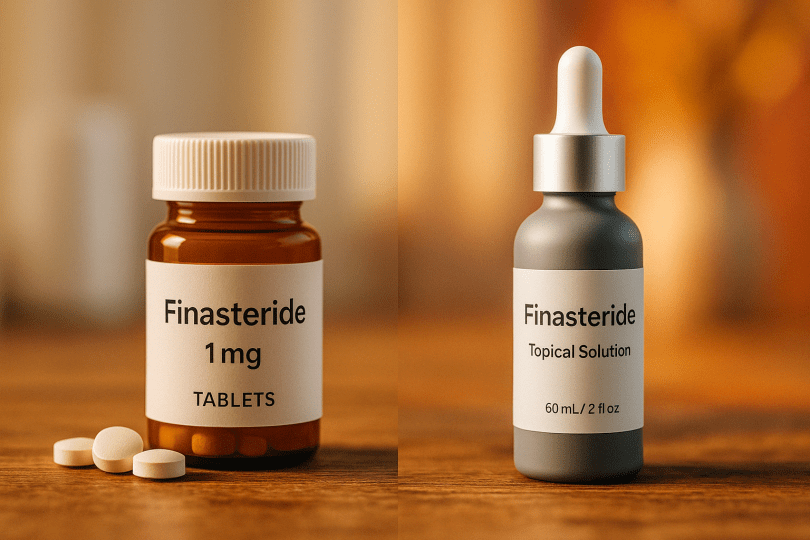
Finasteride Fundamentals: How It Works, Why It Works, and Potential Risks

Finasteride is one of the most widely prescribed medications for male pattern baldness (androgenetic alopecia). Originally developed to treat benign prostatic hyperplasia (BPH) at higher doses, Finasteride was later approved at a 1 mg daily dosage specifically to combat hair loss in men. While it has proven efficacy in slowing and sometimes reversing hair loss, it also carries a profile of possible side effects that users should be aware of. In this post, we’ll explore the mechanisms behind Finasteride, why it’s effective for hair loss, and the risks associated with its use.

Read More »

Finasteride and Hair Regrowth: What Realistically Happens After One Year

Male pattern baldness, also known as androgenetic alopecia, remains one of the most common concerns for men worldwide. Many individuals turn to Finasteride—often prescribed in a 1 mg daily dosage—to slow hair loss and encourage regrowth. But despite its popularity, people often wonder: “What can I realistically expect after taking Finasteride for a year?

In this comprehensive post, we’ll dive into the science behind Finasteride, look at evidence from clinical trials, and provide practical insights on what kind of regrowth is typical, particularly in the vertex (crown) region.

Read More »

Male Pattern Baldness 101: Understanding and Addressing Hair Loss

Hair loss is a topic that concerns millions of men worldwide. While there are many types of hair loss—such as alopecia areata, telogen effluvium, or traction alopecia—the most prevalent form among males is androgenetic alopecia, commonly referred to as male pattern baldness. This condition is primarily genetic and is closely linked to the hormone DHT (dihydrotestosterone), which causes hair follicles to shrink progressively (a process often described as “miniaturization”) until they can no longer produce visible hair.

In this blog post, we’ll introduce you to the basics of male pattern baldness, discuss the mechanism behind it, and highlight the two most commonly prescribed medications—Finasteride and Minoxidil—that serve as the frontline treatment against this form of hair loss.

Read More »