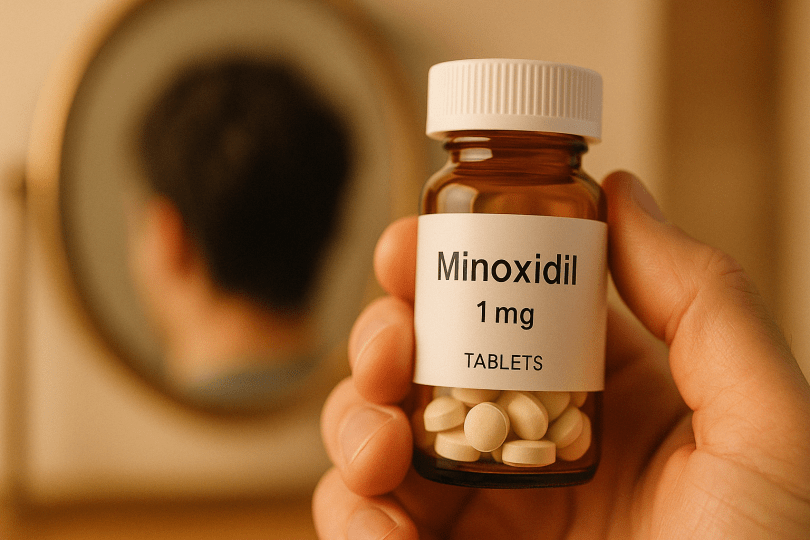
Oral Minoxidil for Hair Loss: What You Need to Know

Hair loss can be a distressing experience for both men and women. Whether it’s gradual thinning or more sudden shedding, many of us have stood in front of the mirror and wondered, “Is there anything that actually works?” One name that’s been gaining more and more attention in recent years is oral minoxidil.

You might be familiar with topical minoxidil, the over-the-counter solution or foam found in most drugstores. But now, dermatologists and hair specialists are increasingly turning to its oral form as a powerful alternative for managing various types of hair loss.

Let’s take a deep dive into what oral minoxidil is, how it works, what the science says, and whether it might be a good option for you.

Read More »
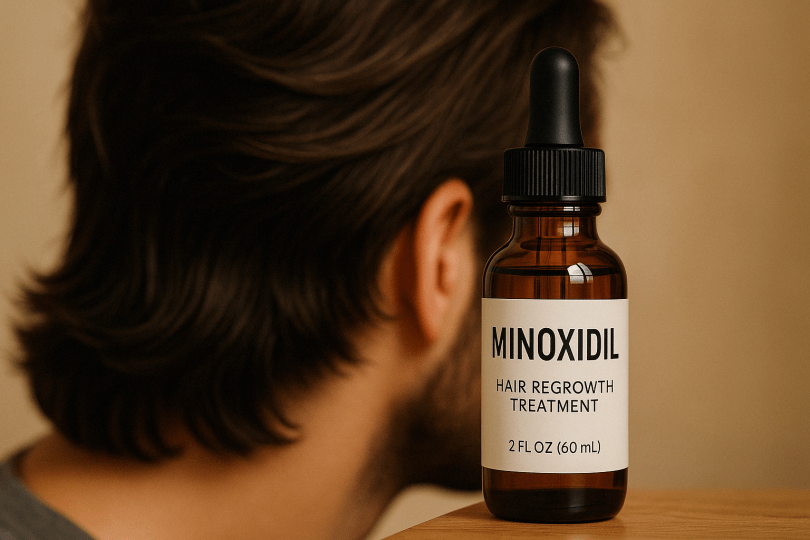
Minoxidil Explained: A Comprehensive Introduction for Anyone Curious About Hair Regrowth

Hair loss can be a frustrating experience—one that prompts many people to seek out effective, science-backed solutions. Among all available treatments, Minoxidil stands out as a long-established option supported by decades of clinical use and research. Originally introduced to the market in the 1980s, Minoxidil’s key appeal is its ability to stimulate hair growth rather than addressing hormonal factors (such as DHT) directly. While other treatments block or reduce hormones that contribute to hair loss, Minoxidil acts as a “growth stimulator,” helping hair follicles produce thicker, healthier hair shafts over time.

This article provides an in-depth look at how Minoxidil works, who might benefit from it, the nuances of different formulations (like foam vs. liquid), how to handle initial shedding, and considerations around compliance. The goal is to equip you, as an interested layperson, with a solid understanding of why Minoxidil remains a cornerstone in the fight against hair loss, the strengths and limits of this topical medication, and how best to incorporate it into your hair-restoration journey.

Read More »

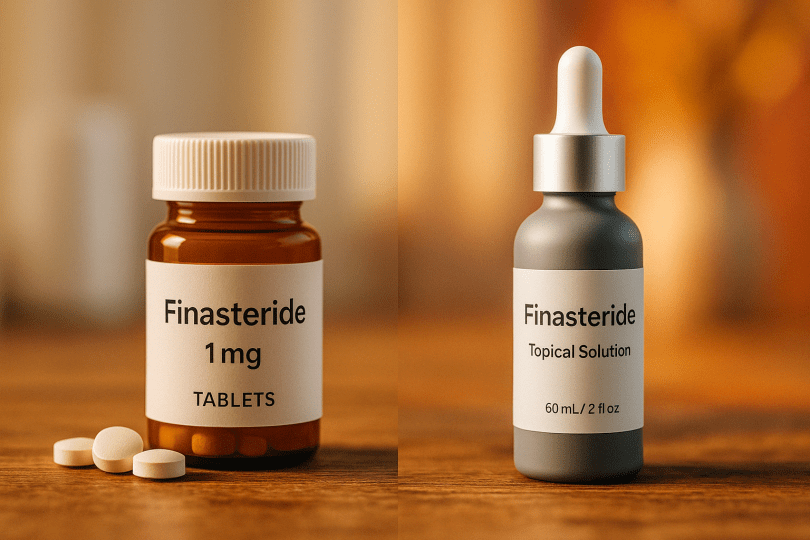
Oral vs. Topical Hair Loss Treatments: Which Option is Best for You?

Hair loss is a challenging and often emotionally charged issue for many men. Fortunately, proven medications like Finasteride, Dutasteride, and Minoxidil have been helping millions of individuals slow or even reverse hair loss for decades. But recently, a growing interest in topical formulations promises similar benefits with potentially fewer side effects. So, which route—oral or topical—is truly the best for managing hair loss?

Read More »

Male Pattern Baldness 101: Understanding and Addressing Hair Loss

Hair loss is a topic that concerns millions of men worldwide. While there are many types of hair loss—such as alopecia areata, telogen effluvium, or traction alopecia—the most prevalent form among males is androgenetic alopecia, commonly referred to as male pattern baldness. This condition is primarily genetic and is closely linked to the hormone DHT (dihydrotestosterone), which causes hair follicles to shrink progressively (a process often described as “miniaturization”) until they can no longer produce visible hair.

In this blog post, we’ll introduce you to the basics of male pattern baldness, discuss the mechanism behind it, and highlight the two most commonly prescribed medications—Finasteride and Minoxidil—that serve as the frontline treatment against this form of hair loss.

Read More »